Morning Star Pattern: Trading Crypto Using Morning Star Candlestick

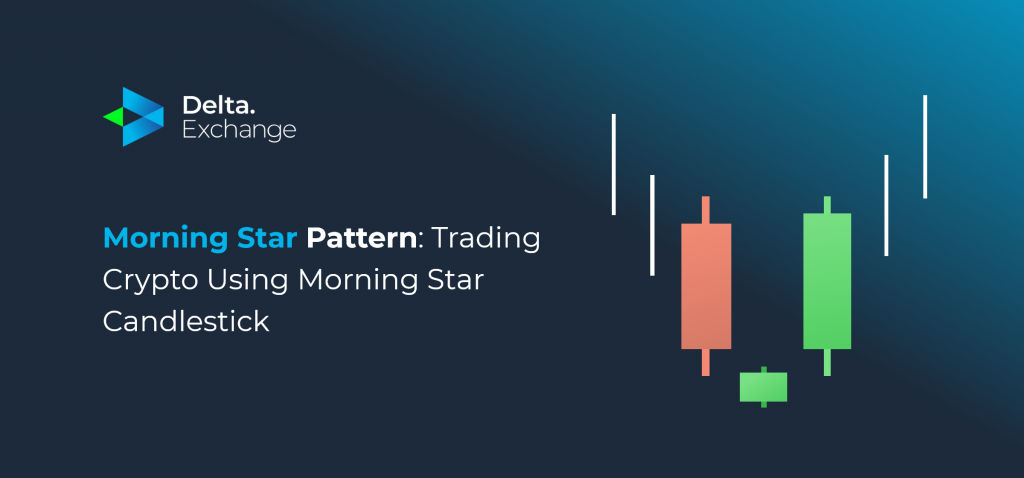
The morning star pattern is a three-candle bullish reversal pattern that forms at the bottom of a downtrend. It consists of one long bearish candle, one small-bodied "star" candle (often a doji), and one long bullish candle that closes above the midpoint of the first candle - signaling that sellers are losing control and buyers may be stepping in.
When markets are gripped by a prolonged downtrend, traders look for early signals that momentum is shifting. The morning star candlestick pattern is exactly that kind of signal. Found in candle charts, particularly in the stock and cryptocurrency markets, the morning star chart pattern is a bullish reversal pattern that indicates a downtrend may be coming to an end and that it may be a good time to buy. This pattern is a strong indication that the bears have exhausted themselves and that the bulls are ready to take control of the market. In this guide, we'll break down how to identify the morning star candlestick formation, how it compares to the evening star pattern
What Is the Morning Star Candlestick Pattern?
The morning star candlestick pattern is a three-candle bullish reversal formation that appears at the bottom of a downtrend. It takes its name from the astronomical "morning star" the planet Venus, which appears in the sky just before sunrise - much like this pattern tends to appear just before a market shifts from a downtrend toward an uptrend.
Key characteristics of the Morning Star Candlestick Pattern:
• Pattern type: Bullish reversal
• Number of candles: Three
• Typically appears after: An established downtrend
• Opposite formation: The candlestick evening star pattern (a bearish reversal)
• Best used alongside: Volume, RSI, and moving averages for confirmation
Identifying The Morning Star Pattern in crypto
Identifying the Morning Star pattern in the crypto market is relatively straightforward.
1. The first step is to locate a downtrend in the market. The downtrend is identified by a series of lower lows and lower highs, as shown in the BTCUSD daily price chart below.
2. The next step is to look for the formation of the three candles that make up the Morning Star pattern.
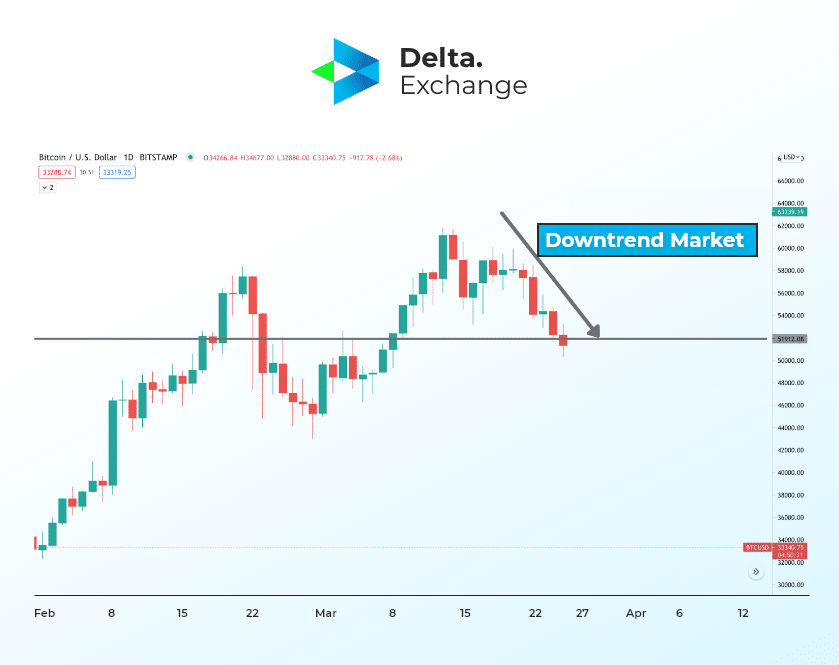
3. The first candle is a bearish candle, also known as the "long black candle". This candle should be relatively large and should have a relatively small or non-existent upper shadow.
4. The second candle is a small candle, also known as the "doji". This candle should have a small real body and long upper and lower shadows.
5. The third candle is a bullish candle, also known as the "long white candle". This candle should be relatively large and should have a relatively small or non-existent lower shadow. It's important to note that the second candle (doji) should be located within the range of the first candle. The third candle should close above the midpoint of the first candle.
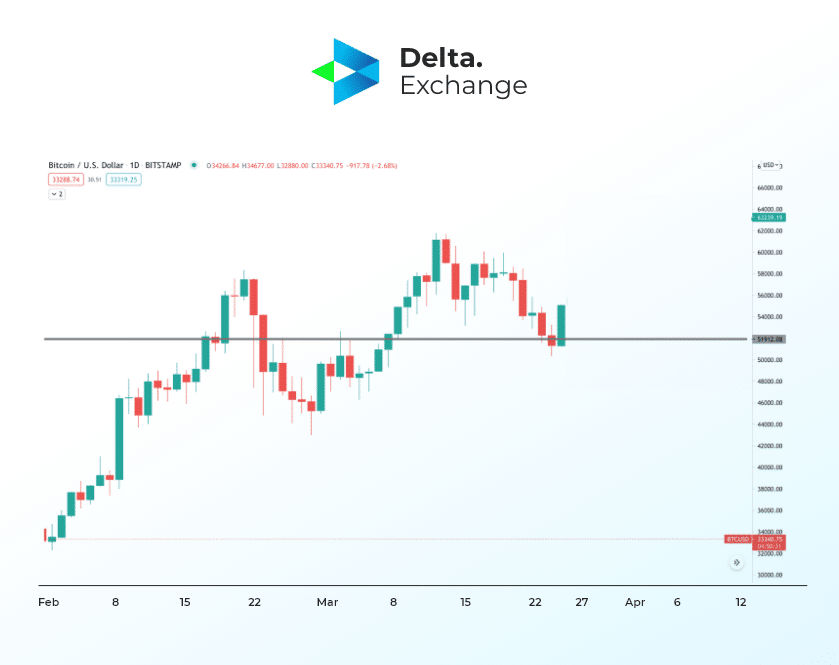
As a continuation to the chart above, now we see a bullish candle that closed over the high of the candle twice removed from it. Comparing the last three candle formations, this chart now satisfies the conditions for the morning star pattern.
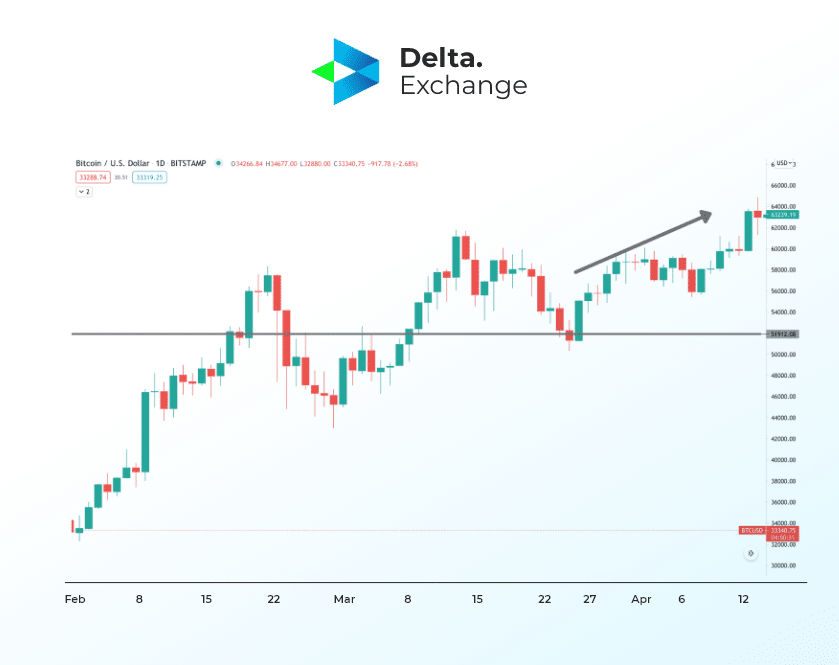
Finally, this image shows the pattern was indeed correctly identified, and it is a sign that the bears are losing control and that the bulls are gaining control. This can be a good opportunity to buy and make profit.
Difference Between the Morning Star and Evening Star Pattern
The morning star pattern and the evening star pattern are mirror-image reversal signals. The morning star is a bullish reversal that appears after a downtrend, while the evening star is a bearish reversal that appears after an uptrend. Both are three-candle formations built from a large candle, a small "star" candle, and a large candle in the opposite direction.
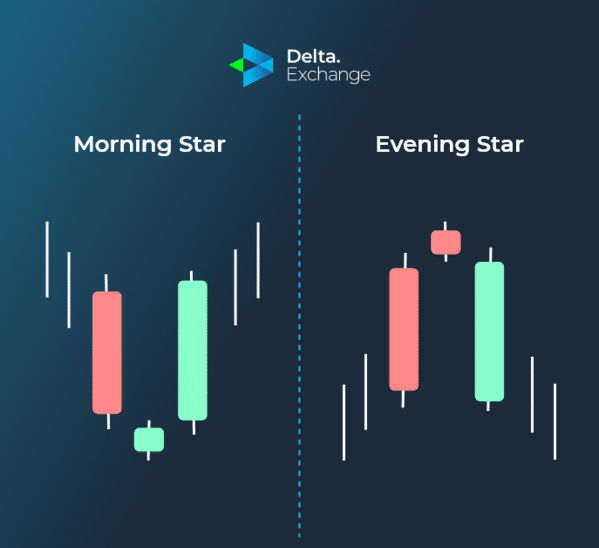
The Morning Star and Evening Star patterns are both reversal patterns found in candle charts, but they carry opposite implications. The morning star pattern is a bullish reversal pattern that indicates a downtrend may be coming to an end, and it may be a good time to buy. On the other hand, the evening star pattern is a bearish reversal pattern that indicates an uptrend may be coming to an end and it may be a good time to sell. The candlestick evening star pattern is also composed of three candles, but with opposite implications: the first is a bullish candle (the "long white candle"), the second is a small candle (the "doji"), and the last is a bearish candle (the "long black candle"). This pattern signals that the bulls have exhausted themselves and the bears are ready to take control of the market.
Steps To Trade Crypto Using the Morning Star Pattern
Trading crypto using the Morning Star pattern can be a profitable strategy, but it's important to have a well-defined plan in place. Here are some general steps to follow when trading crypto using the Morning Star pattern:
- Locate the pattern: Look for a downtrend in the market and identify the three candles that make up the Morning Star pattern. The first candle should be bearish, the second should be a small candle (doji), and the third should be bullish.
- Confirm the pattern: Use other technical indicators such as moving averages, Relative Strength Index (RSI), and volume to confirm the validity of the pattern. The more confirmations, the more reliable the pattern.
- Identify the entry point: Look for the point at which the third candle (bullish) closes above the midpoint of the first candle. This is the ideal entry point to buy.
- Set a stop loss: To minimize potential losses, it's important to set a stop loss at a level below the low of the first candle. This will limit your losses in case the pattern does not work out.
- Take profit: Identify potential profit-taking levels using technical analysis such as resistance levels or Fibonacci retracements.
- Monitor the position: Keep an eye on the position and monitor the market for any changes. If the market starts to move against the position, consider closing the position to minimize potential losses.
Just How Reliable is the Morning Star Pattern while Trading Crypto?
The Morning Star pattern is considered a relatively reliable reversal pattern in the stock and crypto markets, but it's not a guaranteed indicator of a reversal. The pattern is a signal that the bears have exhausted themselves and the bulls are ready to take control of the market. However, it's important to use the pattern in combination with other technical analysis tools and indicators to make a more informed decision.
Limitations of the Morning Star Pattern
The Morning Star pattern is a relatively reliable reversal pattern, but it does have some limitations. Here are a few things to keep in mind when using the pattern:
- False signals: The pattern can generate false signals, especially in choppy or sideways markets. It's important to use the pattern in combination with other technical analysis tools and indicators to confirm the validity of the pattern.
- Limited to downtrends: The pattern is only useful for identifying potential reversals in downtrends. It's not useful for identifying potential reversals in uptrends.
- Not a guaranteed indicator of a reversal: It's not a guaranteed indicator of a reversal and it's important to use the pattern in combination with other technical analysis tools and indicators to make a more informed decision.
Conclusion: Trading the Morning Star Pattern
In conclusion, the morning star candlestick pattern can be a valuable tool for traders in the crypto market, but it's important to use it in combination with other technical analysis tools and indicators, and to consider the context and location of the pattern. Understanding both the morning star and evening star candle patterns gives traders a more complete view of potential reversals in either direction. Hope this blog post gives you an understanding of how you can use the morning star candlestick formation to place your trades! Interested in crypto derivatives trading in India? Head over to Delta Exchange today to find out how!
Frequently Asked Questions
Q. What is the morning star candlestick pattern?
A. The morning star candlestick pattern is a three-candle bullish reversal formation - a long bearish candle, a small-bodied "star" candle, and a long bullish candle - that typically appears at the end of a downtrend and signals that buyers may be regaining control.
Q. How do I confirm the validity of the Morning Star pattern?
A. To confirm the validity of the Morning Star pattern, use other technical indicators such as moving averages, Relative Strength Index (RSI), and volume. The more confirmations, the more reliable the pattern.
Q. What is the difference between a morning star and an evening star pattern?
A. The morning star pattern is a bullish reversal that appears after a downtrend, while the evening star pattern is a bearish reversal that appears after an uptrend. Both are three-candle formations, but their candle order and market implications are mirror opposites of each other.
Q. What is a morning doji star?
A. A morning doji star is a version of the morning star pattern where the middle candle is a true doji, meaning its open and close prices are nearly identical. It's generally viewed as a stronger bullish reversal signal than a standard morning star with a larger-bodied middle candle.
Q. Is the morning star pattern bullish or bearish?
A. The morning star pattern is a bullish pattern. It signals a potential reversal from a downtrend to an uptrend, which is the opposite of the bearish evening star pattern.
Q. How often should I monitor my positions when trading crypto using the Morning Star pattern?
A. It's important to keep an eye on your positions and monitor the market for any changes. If the market starts to move against your position, consider closing the position to minimize potential losses. The frequency of monitoring positions may vary depending on the volatility of the market, the size of the trade, and the trader's risk appetite.
Q. Can the morning star pattern appear on any chart timeframe?
A. Yes. The morning star pattern can form on any timeframe, from 1-minute crypto charts to weekly charts, though patterns on higher timeframes are generally considered more significant than the same formation on very short timeframes.